

Watch the hand comparison
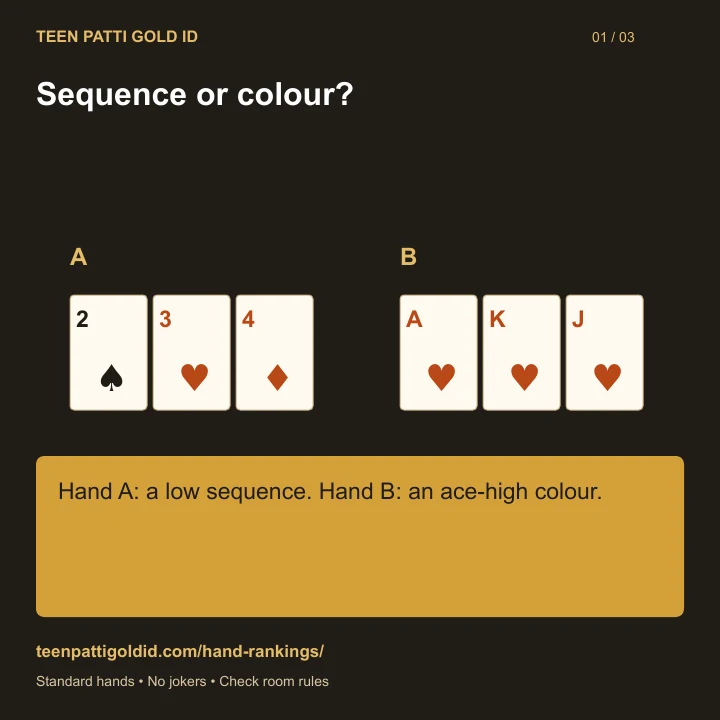
Read the explanation
- Sequence or colour?
Hand A: a low sequence. Hand B: an ace-high colour.
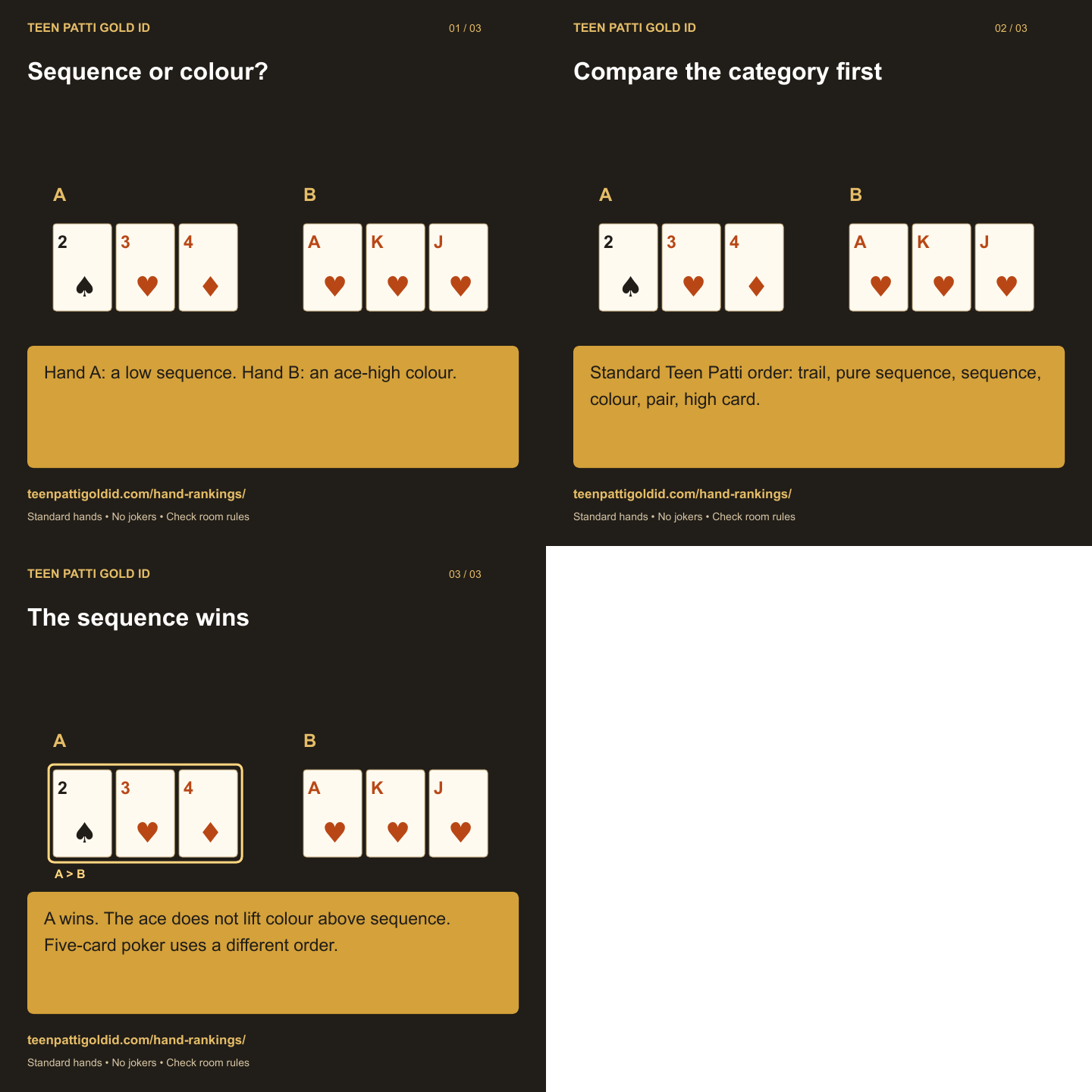
- Compare the category first
Standard Teen Patti order: trail, pure sequence, sequence, colour, pair, high card.
- The sequence wins
A wins. The ace does not lift colour above sequence. Five-card poker uses a different order.
Download GIF · Download still image · Try 10 practice questions
Guide updated:
All six Teen Patti hand probabilities
The rarest standard category is a Pure Sequence, narrowly rarer than a Trail because there are 48 pure runs but 52 three-of-a-kind combinations. High Card dominates: almost three quarters of deals make no pair, run or colour.
| Hand category | Combinations | Probability | About 1 in |
|---|---|---|---|
| Trail / Trio | 52 | 0.2353% | 425 deals |
| Pure Sequence | 48 | 0.2172% | 460 deals |
| Sequence / Run | 720 | 3.2579% | 30.7 deals |
| Colour | 1,096 | 4.9593% | 20.2 deals |
| Pair | 3,744 | 16.9412% | 5.9 deals |
| High Card | 16,440 | 74.3891% | 1.34 deals |
| Total | 22,100 | 100% | — |
“One in 425” does not mean a Trail is due after 424 misses. Each properly shuffled deal has the same category probabilities. Short sessions can be far above or below the average.
Start with a denominator anyone can check
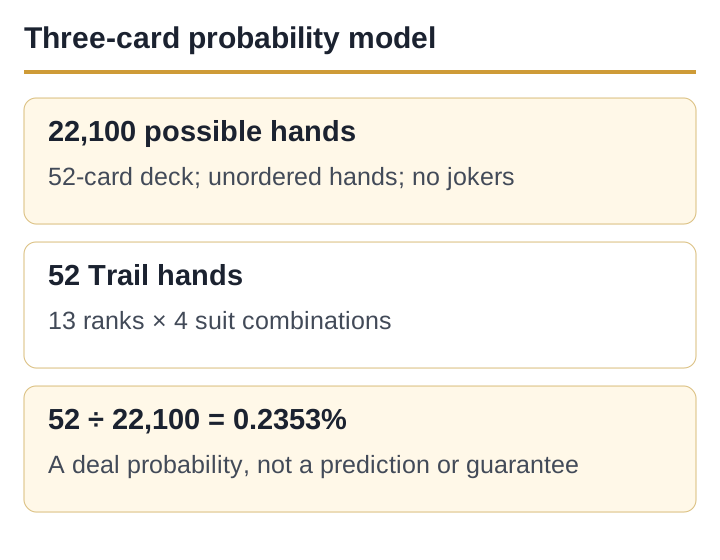
A 52-card deck contains 52 choices for the first card, 51 for the second and 50 for the third. Because the order of the same three cards does not create a new hand, divide by the six possible orders:
52 × 51 × 50 ÷ 6 = 22,100.
This is the combination formula C(52,3). The rest of the calculation places each of those 22,100 hands into exactly one category. We count a straight flush as Pure Sequence, not again as Sequence or Colour; a Trail is not also a Pair.
How each category is counted
Trail / Trio: 52
Choose one of 13 ranks, then choose three of that rank’s four suits: 13 × C(4,3) = 13 × 4 = 52.
Pure Sequence: 48
The model accepts 12 three-rank runs—A-2-3, 2-3-4, through Q-K-A. Each run can be entirely spades, hearts, diamonds or clubs: 12 × 4 = 48.
Sequence: 720
For each of the 12 rank runs, the three ranks can take any of four suits, giving 4³ = 64 suit patterns. Remove the four same-suit patterns already counted as Pure Sequence: 12 × (64 − 4) = 720.
Colour: 1,096
Choose one suit and any three of its 13 ranks: 4 × C(13,3) = 1,144. Remove the 48 Pure Sequences already counted: 1,144 − 48 = 1,096.
Pair: 3,744
Choose the paired rank (13), two of its four suits (6), one of the 12 other ranks and one of four suits for the kicker: 13 × 6 × 12 × 4 = 3,744.
High Card: 16,440
High Card is the remainder after removing every stronger category: 22,100 − 52 − 48 − 720 − 1,096 − 3,744 = 16,440.
Rare does not automatically mean playable
Category probability describes the cards dealt before any betting information. It does not include how many opponents remain, whether they looked, what they contributed, the cost to continue or how the table resolves ties.
A pair is much more common than a Trail, but “I probably have the best hand” cannot be inferred from the pair probability alone. Opponent count and conditional information matter. This page intentionally stops at category frequency rather than turning an exact calculation into false betting certainty.
Use the hand rankings page for strength order and tie caveats. Use blind vs seen to understand the action states that probability alone cannot model.
To find which hand wins rather than how often it is dealt, use the Teen Patti hand comparison tool. Rarity and ranking are different questions.
Jokers and variants change the sample space
The table above does not apply unchanged to Joker, AK47, Hukam, Muflis or reduced-deck formats.
- Joker or AK47: wild cards can complete multiple categories, so the count depends on exactly which cards are wild and how ties are classified.
- Muflis: reversing the ranking order does not change which cards are dealt, but it changes which category is valuable.
- Hukam: a trump/wild-card rule changes how hands are formed.
- Custom sequence rules: excluding A-2-3 or changing accepted runs alters the Pure Sequence, Sequence, Colour and High Card counts.
That is why this article states the rule model before giving a percentage. See the variation guide for rule concepts, then use the live table’s own definition.
Independent arithmetic check
Three checks catch most counting errors:
- Mutual exclusivity: no Pure Sequence is also counted as Colour or Sequence.
- Complete total: 52 + 48 + 720 + 1,096 + 3,744 + 16,440 = 22,100.
- Percentage total: unrounded category probabilities add to 100%.
The rounded “1 in” values are explanatory, not exact recurrence intervals. To reproduce a row, divide its combination count by 22,100 and multiply by 100.
Sources and scope
- Teen Patti overview — used only to cross-check the conventional six-category structure; mathematical counts are shown in full above.
- Google Play India listing for Teen Patti Gold:3 Patti Rummy — publisher’s displayed standard hand order.
- Teen Patti Gold ID hand rankings — site convention and explicit tie/sequence caveats.
Published and last reviewed: 30 August 2026. Standard no-joker model; probability is not a result guarantee.